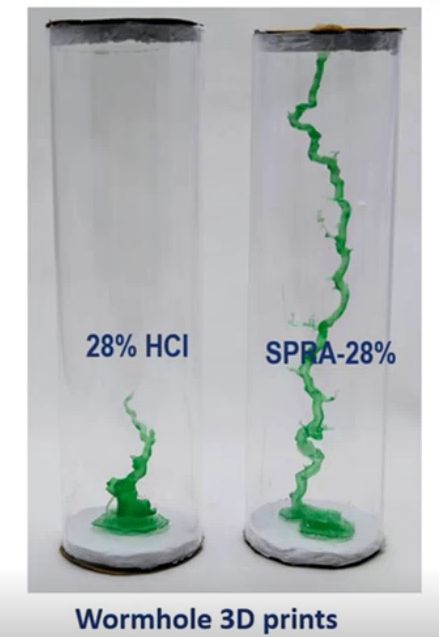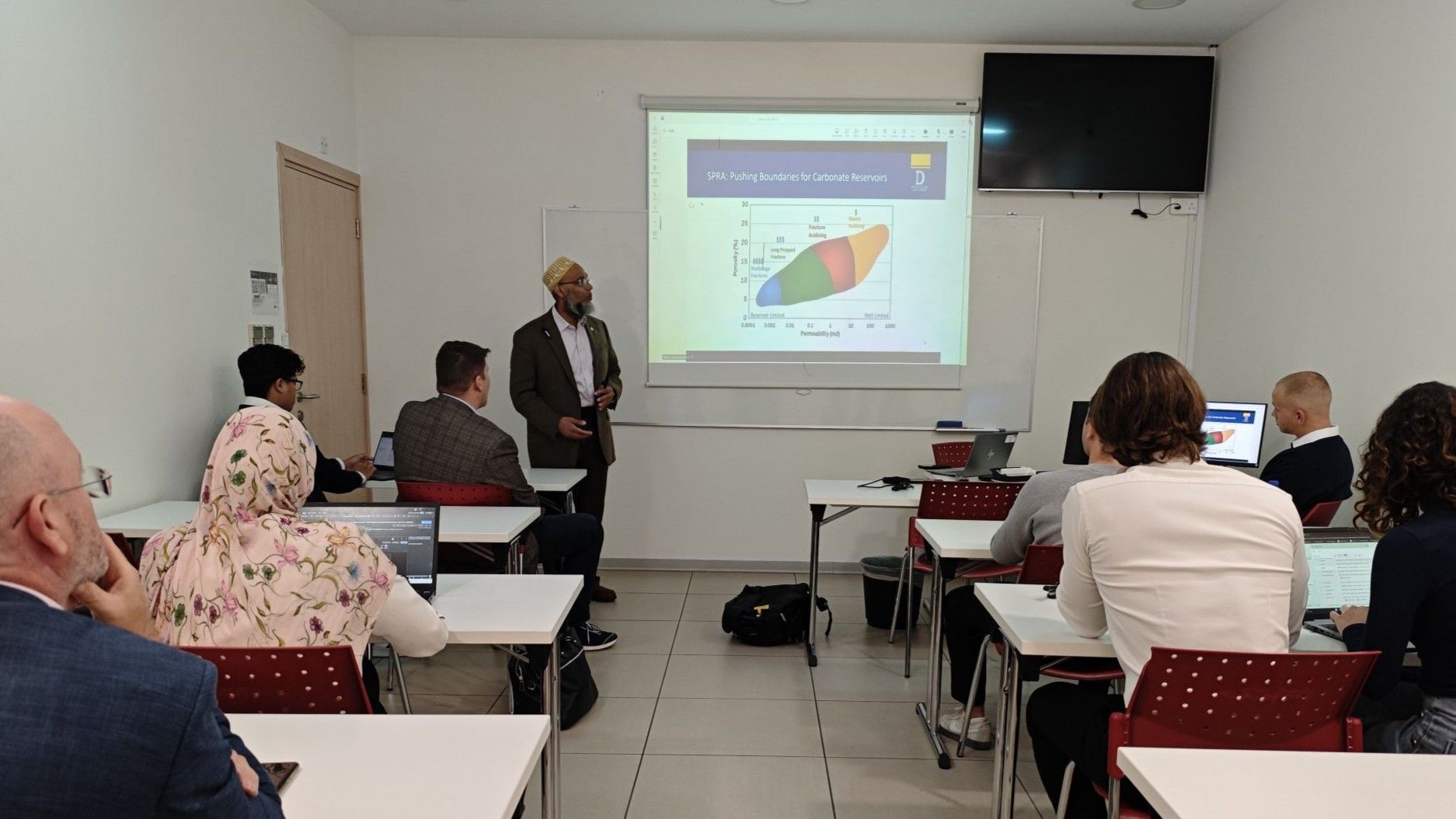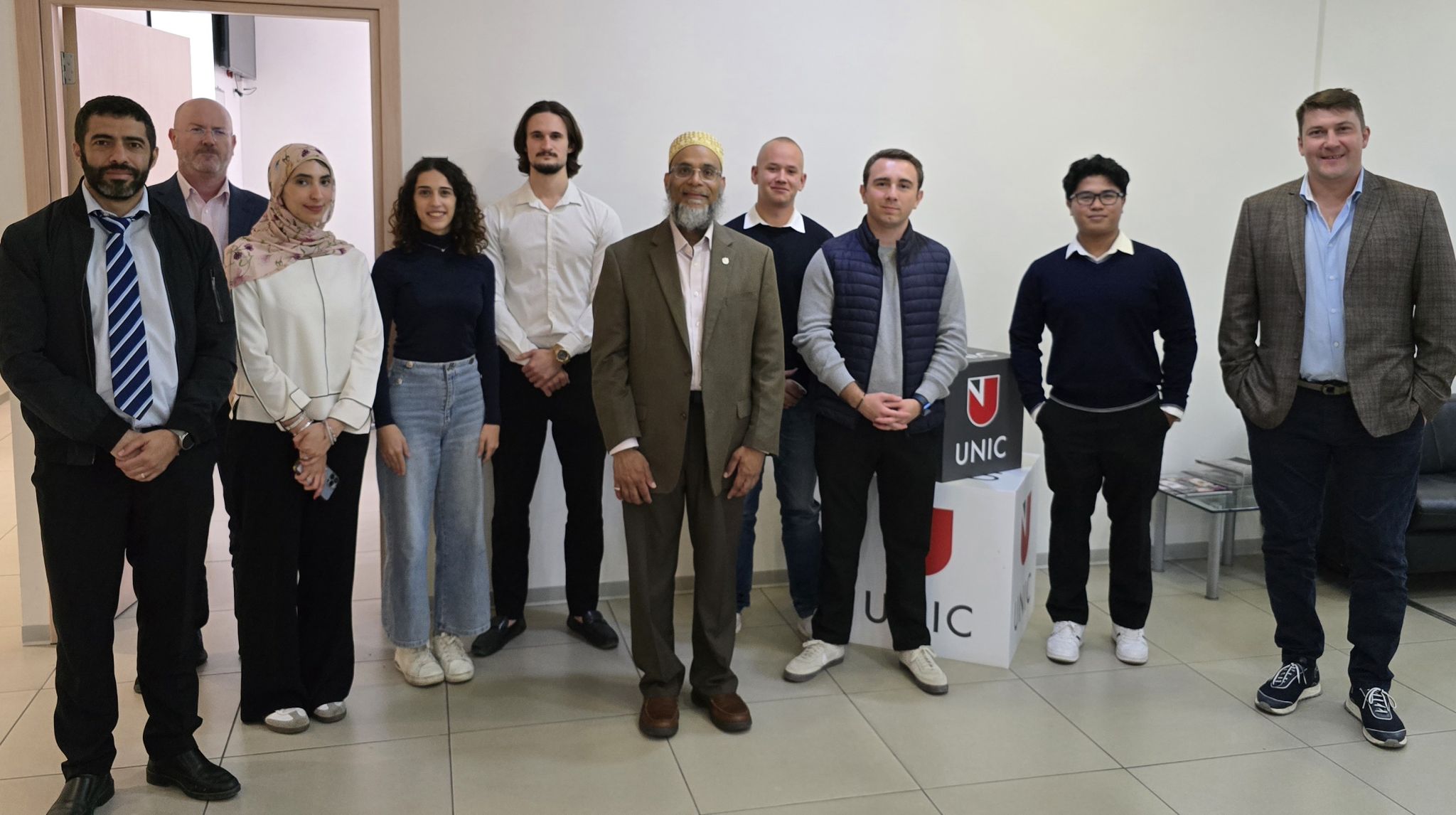
This lecture presents an overview of recent advancements in carbonate stimulation, with a particular focus on the application of Single-Phase Retarded Acids (SPRA). It examines how SPRAs enhance wormhole formation and address the limitations of conventional HCl-based acid systems. Key acidizing mechanisms and performance outcomes are illustrated using CT-scan visualizations.
Location
University of Nicosia, Research & Technology Building – Room RTB2
Date
17 November 2025
Time
5:00 PM
Bio / Abstract
Abstract
Selecting the most effective stimulation treatment for carbonate reservoirs is highly dependent on reservoir permeability. Lower-permeability formations require deeper stimulation to achieve economically viable production. While acids are widely used for carbonate stimulation, their high reactivity with the formation restricts the depth of penetration. In high-permeability reservoirs, near-wellbore matrix stimulation using conventional acids is typically sufficient. However, as permeability decreases, matrix stimulation becomes ineffective, necessitating acid fracturing. With further reductions in permeability, even acid fracturing proves inadequate, requiring stimulation through long propped fractures. Each transition—from matrix stimulation to acid fracturing, and from acid fracturing to long propped fractures—results in a substantial increase in well completion costs.
Single-Phase Retarded Acids (SPRA) represent a recent technological advancement that significantly reduces acid reactivity, thereby increasing stimulation depth for both matrix stimulation and acid fracturing. This enables these techniques to be applied to reservoirs where they were previously ineffective. In existing matrix stimulation and acid fracturing applications, replacing conventional acids with SPRAs can substantially reduce the required acid volumes, lowering environmental impact and decreasing treatment execution and flowback time. Consequently, the use of SPRAs can lead to significant reductions in completion costs and influence overall field development strategies.
Following a brief introduction to carbonate stimulation, the lecture will present SPRA fluid technology and examine the underlying science governing its behavior. The mechanisms and performance characteristics of SPRAs will be discussed in detail, supported by case studies from petroleum regions where the technology has been successfully implemented. By the conclusion of the lecture, participants will have a solid understanding of SPRA technology and be introduced to key resources for further study.
Biography
Dr. Murtaza Ziauddin is a Matrix Stimulation Advisor at SLB in Texas, with more than 28 years of experience in sandstone and carbonate stimulation. He has delivered numerous training courses on stimulation and routinely reviews stimulation designs worldwide. Dr. Ziauddin is the author of three SPE books, two book chapters, more than 40 technical papers, and holds 32 patents. He has supervised over 20 postdoctoral researchers and PhD candidates.
He served as an SPE Distinguished Lecturer on carbonate acidizing during the 2015–2016 term and recently moderated an SPE forum focused on SPRAs. Dr. Ziauddin holds a PhD in Chemical Engineering from the University of Minnesota and is a Distinguished Member of the Society of Petroleum Engineers.
LinkedIn: https://www.linkedin.com/in/murtaza-ziauddin-6b542813/