Overview
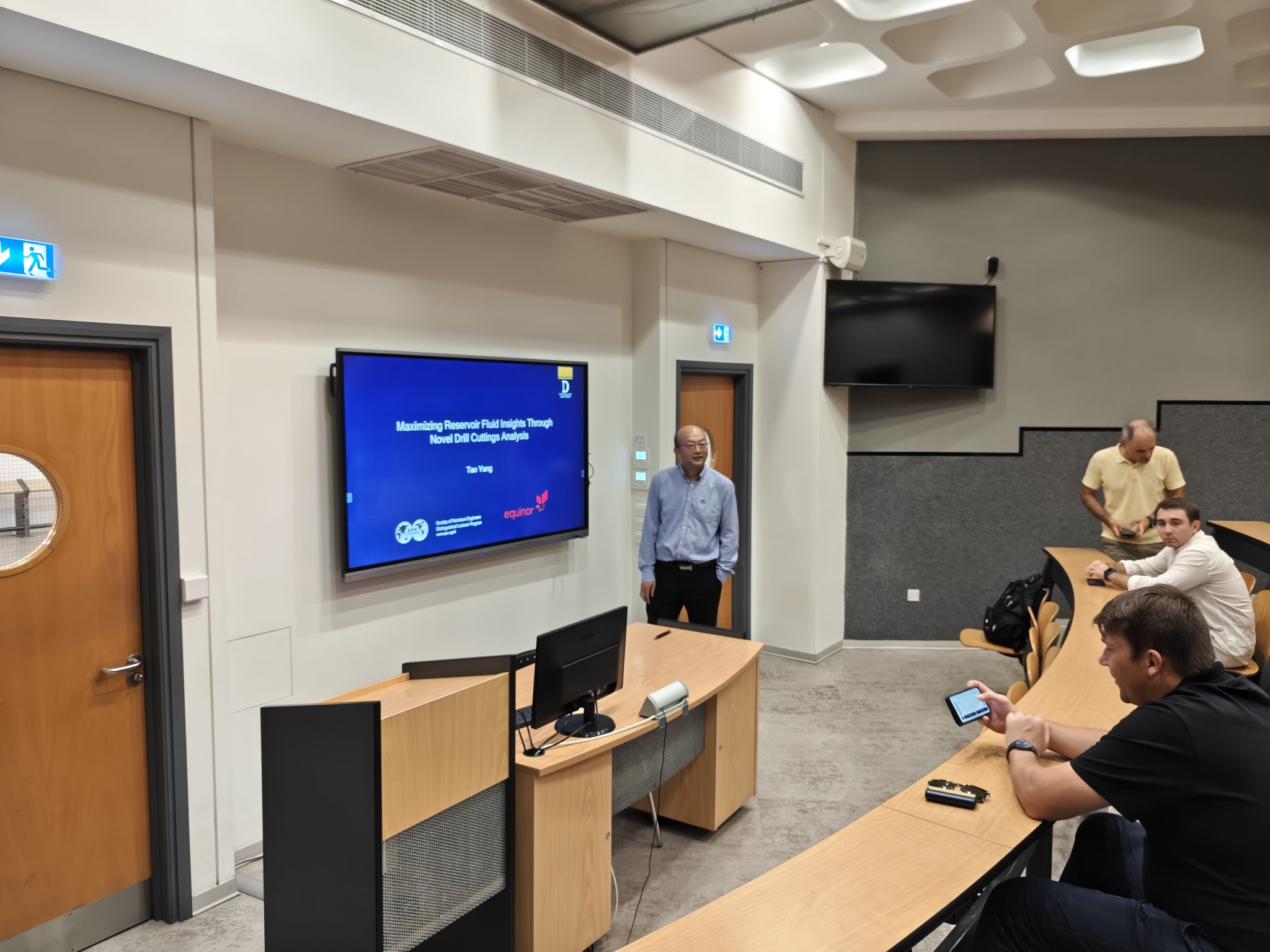
This presentation focuses on advanced geochemical techniques for estimating reservoir fluid properties from drill cuttings. It highlights the application of gel permeation chromatography with ultraviolet detection (GPC-UV) to identify oil and gas characteristics in complex and contaminated samples, offering a cost-effective alternative to conventional downhole fluid sampling.
Location
UNIC Main Campus – Millennium Building, Blue Amphitheatre
Date
18 September 2025
Time
5:00 PM
Bio / Abstract
Abstract
Reservoir fluid sampling and downhole fluid analysis are the primary methods for acquiring reservoir fluid properties. However, only exploration wells typically allow for the collection of a limited number of PVT samples. Downhole sampling in development wells or within the overburden is uncommon. Despite this, there is a strong business need to obtain reliable reservoir oil and gas information in development wells for well placement and completion decisions, as well as in the overburden for well integrity assessments and plug and abandonment (P&A) operations.
Drill cuttings are readily available for all drilled wells and are commonly stored in warehouses. Geochemical analysis has previously been used to estimate oil properties from drill cuttings contaminated with water-based mud. In this presentation, recent advancements in gel permeation chromatography coupled with ultraviolet absorbance detection (GPC-UV) are discussed, with particular emphasis on its application to drill cuttings contaminated by oil-based mud. Recent studies demonstrate the unique ability of the GPC-UV method to identify reservoir fluids in the presence of large volumes of drilling mud. The success of these studies highlights the significant potential of GPC-UV for analyzing reservoir fluids in challenging drill-cutting samples.
Given the widespread availability of drill-cutting samples, this approach provides a cost-efficient, safe, and accurate method for determining reservoir fluid properties without the need for downhole measurements or sampling. This technique supports the vision that “every cutting is a PVT sample” and offers broad applications across drilling and well operations, reservoir management, production optimization, and flow assurance.
Biography
Dr. Tao Yang is a Chief Professional and Senior Specialist at Equinor in Norway. He is a member of the Norwegian Academy of Technological Sciences and the Royal Norwegian Academy of Sciences and Letters. His work focuses on PVT analysis, gas-based improved oil recovery, and advanced data analytics. In recognition of his innovation in real-time fluid identification, Dr. Yang received the World Oil Awards “Best Digital Solution Award” in 2022.
Dr. Yang served as an SPE Distinguished Lecturer during the 2017–2018 season and has received multiple industry honors, including the SPE North Sea Technical Award, SPE Distinguished Membership Award, and SPE Distinguished Service Award.