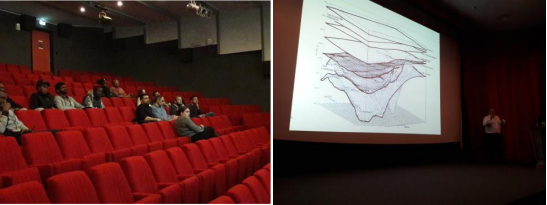
This talk explores how computer modeling can simulate the full lifecycle of hydrocarbons, from generation in source rocks to migration, trapping, and leakage. Using the Haltenbanken area in Norway as an example, it highlights the interdisciplinary data required for 3D basin-wide modeling and discusses the method’s limitations and potential for further research.
Location
Cine Studio Amphitheatre, University of Nicosia
Date
13th February 2019
Time
3:00 PM
Bio/Abstract
The main processes that generate oil and gas from source rocks can be modelled by computer. These are: burial history, temperature history of the source rock, oil and gas generation history, primary migration out of the source rock, secondary migration to structural highs, trapping, spilling and leakage. Putting all these processes together in 3 dimensions to give a basin-wide history of hydrocarbon accumulations requires input from many disciplines.
The talk will show an example of this from the Haltenbanken area of Norway, and discuss the limitations and scope for further work.
Bio:
Dr Paul Featherstone lectures on the Oil and Gas Engineering programme at the University of Nicosia. He holds a first class Honours degree in Geology from the University of Birmingham (UK), earned in 1973, and a PhD in Geophysics from the University of Durham (UK), completed 1976. He joined Shell International upon completion of his doctorate and worked for Shell for 33 years as an oil and gas explorer in many countries (Oman, Egypt, Netherlands, Australia, Kazakhstan) as well as researching and developing multiple technologies and software packages, before retiring in 2009 as a Global Geologist conducting reviews of projects in typically 35 countries a year. He lives in Paphos with his wife and 13-year-old twins.